48 Hour Mission 2026 // 13-15 Nov // Entries Open 23 Oct // Let's get moving to protect the places we play // 48 Hour Mission 2026 // 13-15 Nov // Entries Open 23 Oct // Let's get moving to protect the places we play //
Pile more plants onto every meal today. More colour, lighter footprint.
Make this pledgeYou’ll be taken to the Pledge platform, where you can sign in or create a free account.
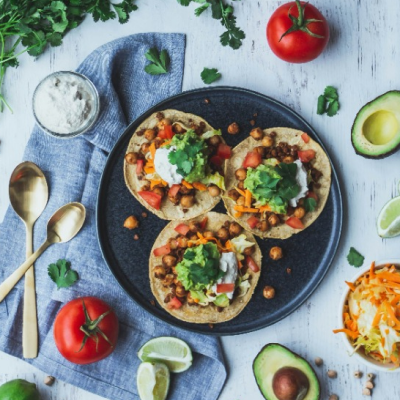
Plant foods have some of the smallest climate footprints of anything we eat. The more room they take up on your plate, the less there is for the heavy hitters.
How we calculated this12: Responsible consumption and production · 13: Climate action
Here’s a surprising one: only 6.5% of Aussie adults eat the recommended serves of veg, according to the ABS. So there’s plenty of room on most of our plates.
And plants are about as light as food gets for the planet. Our World in Data puts a kilo of peas at around 1 kg of CO2e, compared with roughly 60 kg for a kilo of beef. Food systems make up around a quarter of global emissions, so what fills our plates really does add up.
You don’t need a label or a rulebook for this one. Every extra handful of veg, beans or wholegrains nudges out something heavier.
Because protecting the places we play is easier when our plates look a bit more like the veggie patch. 💙
You’ll be taken to the Pledge platform, where you can sign in or create a free account.
This is an estimate of the potential impact of taking this pledge.
Your actual impact may vary depending on how often you take the action, your starting point and your personal circumstances.
Read our impact methodologyOnce you’ve made the pledge, the platform is where the action gets recorded.
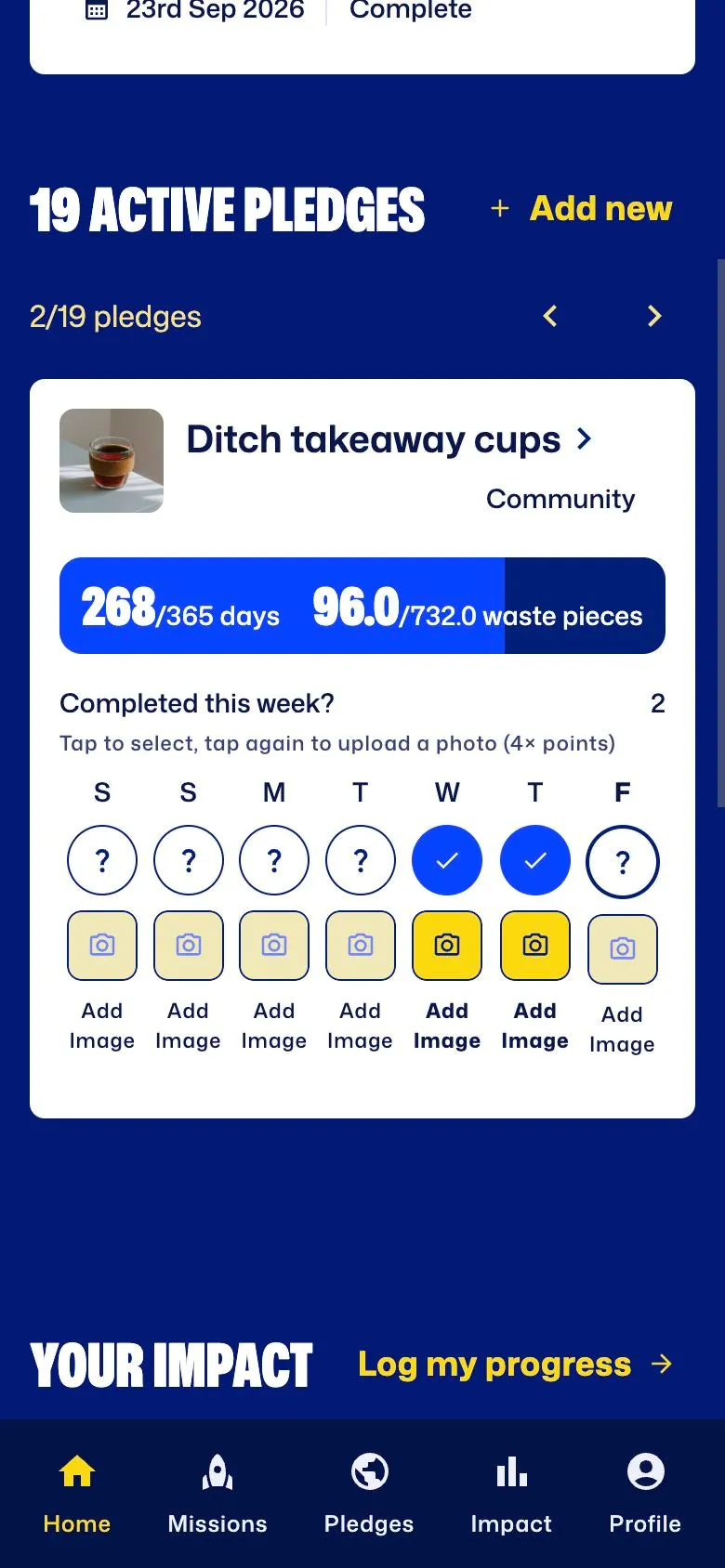
Mark the action complete each time you take it.
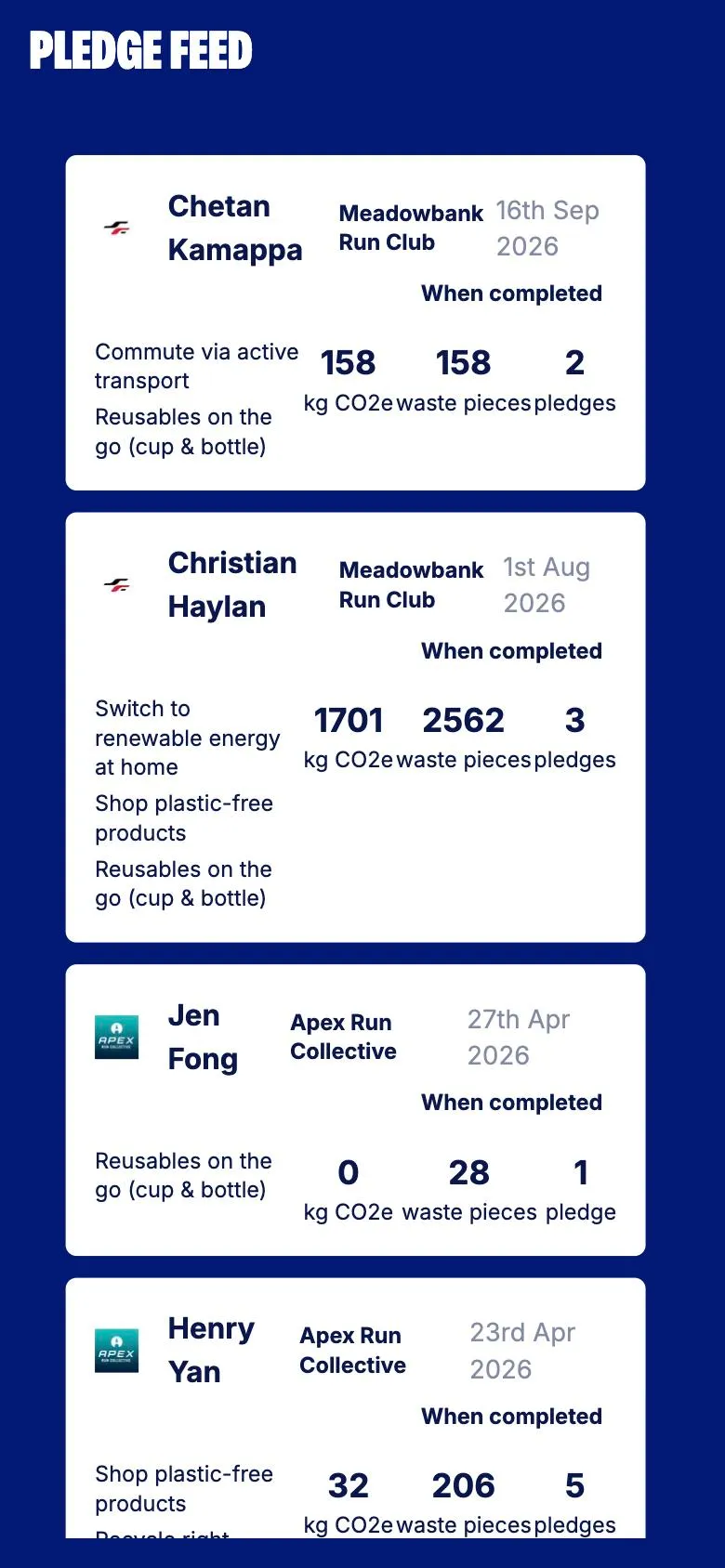
Add a photo of your action and earn four times the points.
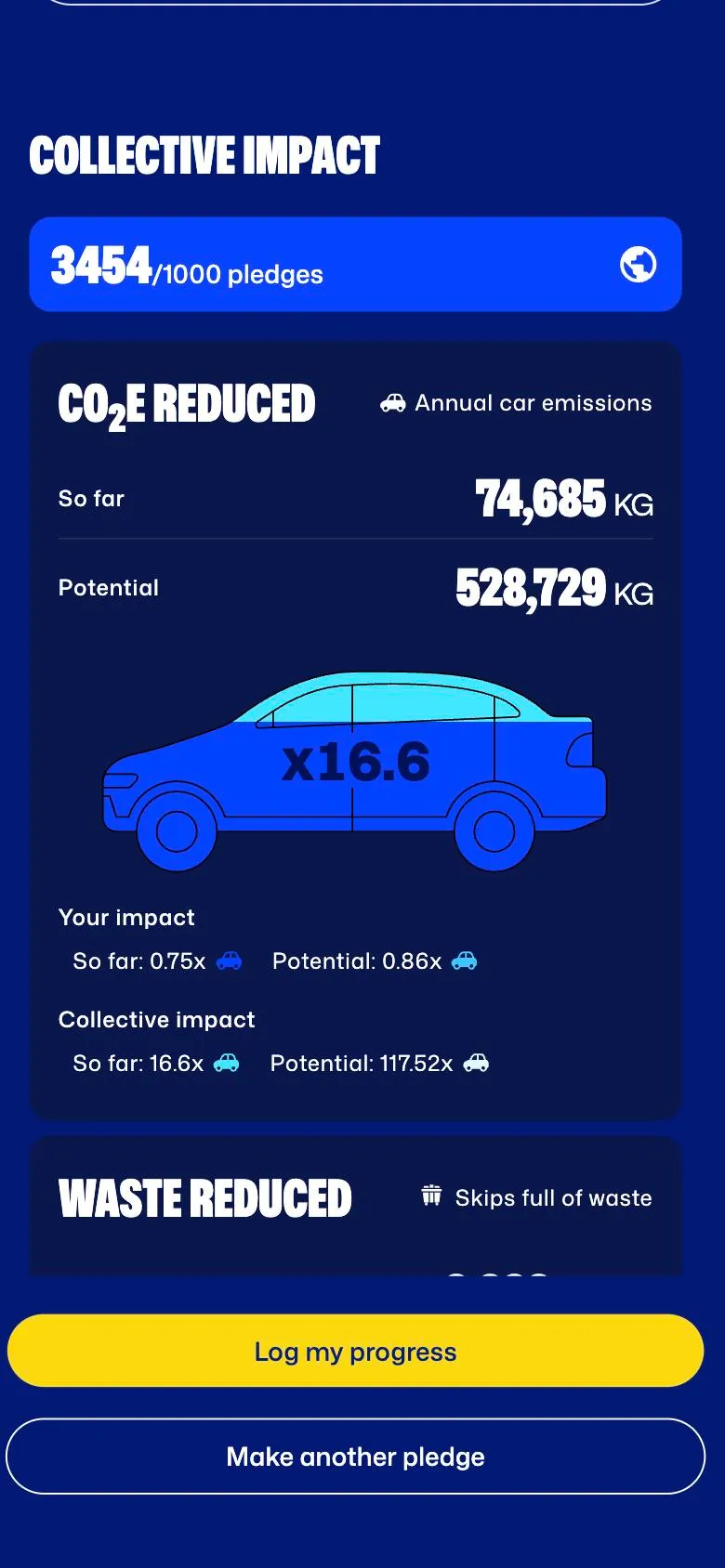
Watch your action join the community total.
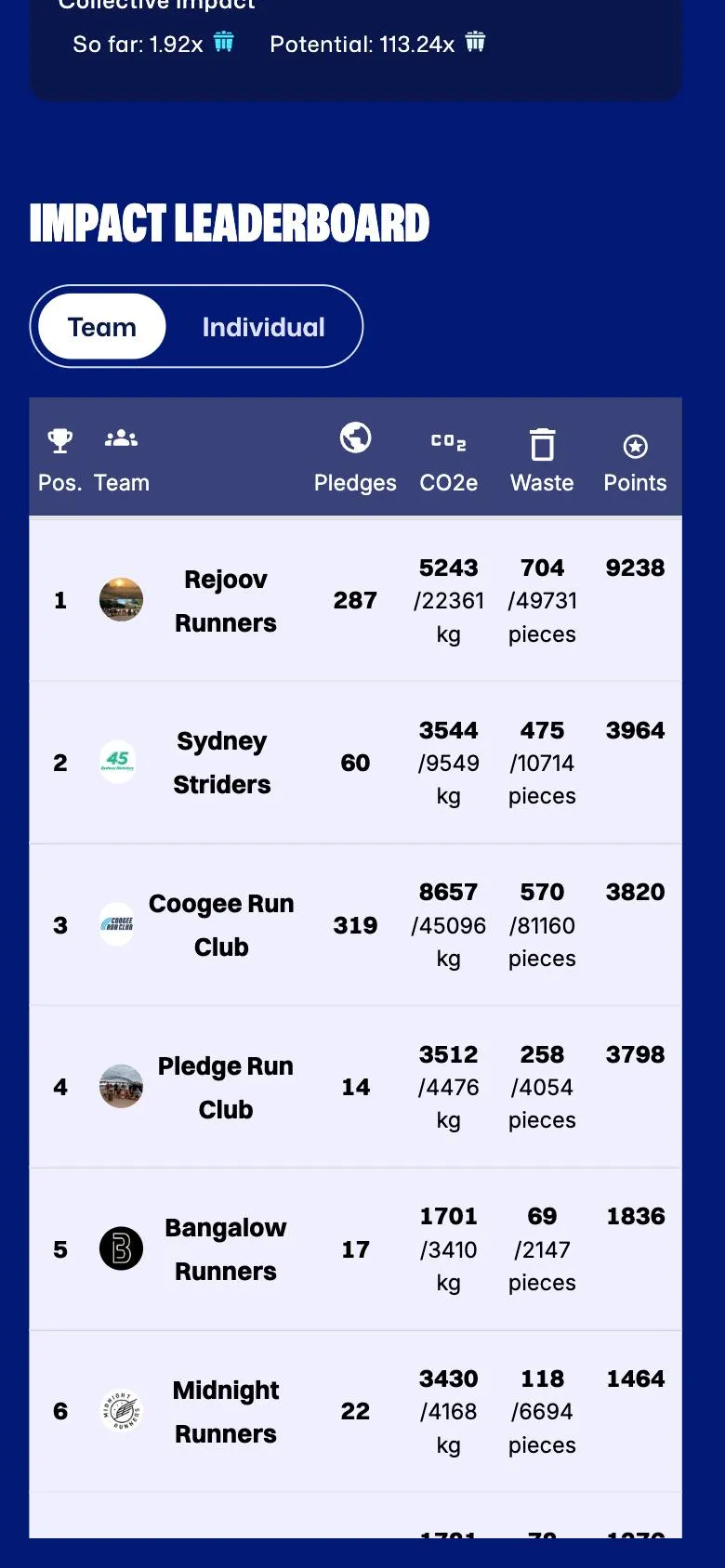
Every check-in earns points that climb the leaderboard.
Eat for Health, recommended daily serves for adults: https://www.eatforhealth.gov.au/food-essentials/how-much-do-we-need-each-day/recommended-number-serves-adults
Our World in Data, why what you eat matters more than food miles: https://ourworldindata.org/food-choice-vs-eating-local
Australian Farmers’ Markets Association, find a market near you: https://farmersmarkets.org.au/find-a-market/
Sports Dietitians Australia, find an Accredited Sports Dietitian: https://sportsdietitians.com.au/




Pledge for the Planet acknowledges the Traditional Custodians of the lands and waters where we live, work, move and play, and pays respect to Elders past and present. We recognise that First Nations peoples have cared for this country for more than 65,000 years, and that their knowledge and continuing connection to land and sea has much to teach us about protecting the places we all share. Sovereignty was never ceded.